Everything has an end except the sausage which has two. The idea of a national defense system was like a sausage divided lengthwise into three parts. But the military division of Sweden, Finland, Norway/Denmark is history. With the new doctrine, the strategy is cut on the second link 1) The Arctic flank with the North Calotte, extended towards Greenland 2) The Baltic flank around the southern Baltic Sea and Kattegat/Skagerack. 3) The Mid-Nordic region and the “capital corridor”, although it is unclear how.
Previously, each country planned its defense based on a vertical logic . Norway focused on the North Sea and the Atlantic. Sweden on the Baltic Sea and the idea of invasion. Finland on the land border with Russia.
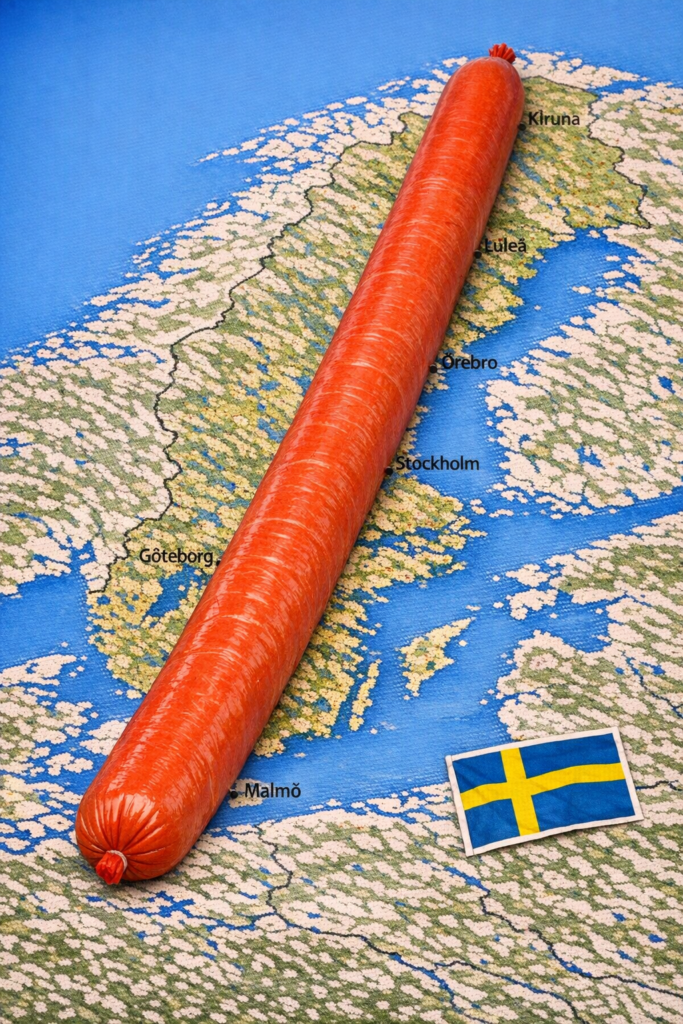
“Neutrality”?
They were like three parallel sausages, where neutrality characterized Sweden and Finland. ”Sweden’s military non-alignment, aimed at our country being able to be neutral in the event of war in our immediate area, remains” was the Swedish government’s mantra. Finland in the shadow of a ”friendship pact” with the Soviet Union. The pawing for a great power was christened Finlandization.
In the secret war plans, the Swedish government and military knew that Sweden would not be able to hold out against the Soviet Union on its own in the long run. The military doctrine was based on the fact that the Swedish defense would be a threshold for a week or so until NATO and the USA intervened. With aviation, landing troops and even nuclear weapons if it were to be practiced.
The Swedish double standards included adaptation of air bases, intelligence operations and harmonized signal systems. Also secretly stockpiling fuel and spare parts. The Jas Gripen with armament is largely an American plane, to name an example.
Finlandization
EU membership was a struggle over how the Hague Convention’s concept of neutrality should be interpreted. Based on the 2009 solidarity declaration, the Riksdag made a bold statement: ”Sweden will not remain passive if a disaster or attack were to strike another member state or a Nordic country. We expect these countries to act in the same way if Sweden is affected.”
Finland was in a worse predicament. In its backpack was the Treaty of Friendship, Cooperation and Mutual Assistance (VSA Pact) from 1948. The country was to defend its territory if the Soviet Union was attacked via Finland by a foreign power, later synonymous with NATO. Threatened attacks, according to the Kremlin, could lead to the ”consultation” of Russian troops in Finland.
Finlandization, founded by Paasikivis and Kekkonen, forced the presidents, to fall for the Finnish bear. Unlike the high-tech pangpang in the Swedish village sausage, the pork sausage link was filled with a man-strong army. The cannons were pointed east so there was no doubt about where the enemy was. A “double moral” that in Sweden was firmly established with other signs.
Nato
With Sweden and Finland now in NATO, Russia has lost the ability to control the Baltic Sea and the Arctic separately. They are forced to spread their resources along a 1,300-mile new front, while the Nordic countries can concentrate their forces quickly where they are needed. In a transverse (horizontal) defense where the Nordic region is seen as a coherent area of operations.
| Factor | Before February 2022 | After February 2022 |
| Security policy | Military non-alignment | Full NATO membership |
| Threat image | Low risk of major war in Europe | Russia is seen as a direct existential threat |
| The will of the people | Majority against/hesitant to NATO | Strong majority for NATO membership |
Timetable:
2022-02 Russia invades Ukraine
2022-05 Finland & Sweden decide to apply for NATO
2022-05 Formal applications submitted
2022-06 NATO invites both countries (Madrid)
2022–2023 Ratification in progress
2023-04-04 Finland becomes a member
2023–2024 Sweden's ratification is delayed by Turkey & Hungary
2024-03-07 Sweden becomes a member
Summation
- Russia’s invasion of Ukraine showed that military attack in Europe was once again possible.
- Deteriorating security situation in the Baltic Sea region and increased Russian military activity.
- Non-alignment was deemed insufficient to deter a great power attack.
- Need for collective defense (Article 5) for long-term security.
- Rapid swing of opinion in both countries in favor of NATO.
- Broad political consensus emerged after the invasion.
- Long-standing and deep partnership with NATO made membership practically easy.
- The EU’s security guarantees were considered insufficient without NATO’s military structure.
From 2025/2026 (at the same time as Trump threatens NATO with the annexation of Greenland), NATO’s command structure has undergone a historic change. The Arctic flank is gathered under the same roof Joint Force Command Norfolk (JFC Norfolk). The headquarters is Norfolk in Virginia USA, since February 2026 led by a British officer.
To deal with the new geographical reality, NATO’s command structure has been adapted:
- JFC Norfolk (USA): The strategic command that now has primary responsibility for the entire Nordic region and the North Atlantic, including Sweden and Finland. This is to keep the defense concept together from the USA, across the Atlantic to the Baltic states.
- MNC NE (Szczecin, Poland): Leads land operations in northeastern Europe.
The four sausage slices of the Nordics
Norfolk was previously focused on the Atlantic, but now has responsibility for the entire area from the east coast of North America, across the Atlantic, to the Arctic and the Nordic countries.
The transatlantic link between the Arctic and the North Atlantic extends across the Arctic Circle to the Russian border.
1. Arctic belt/ Arctic sentry
Countries directly affected: Finland, Sweden, Norway, Iceland, Greenland/Denmark. Within NATO, primarily the USA
In the north, we are moving from defending three separate borders to seeing the entire Arctic as a strategic unit. The aim is to protect NATO’s backbone in the Atlantic and prevent Russian forces from breaking out of the Kola Peninsula. Norwegian ports (such as Narvik) are now becoming logistics hubs for Swedish and Finnish reinforcements. The air forces operate as a joint fleet across borders.
In February 2026, NATO launched Arctic Sentry , a joint activity to coordinate all military operations in the Arctic under the leadership of JFC Norfolk . This means that air and naval forces from Sweden and other allies now also act under Norfolk’s direct planning when they are in the northern area. Illustrative of the large maneuver with 25 thousand men from 14 countries in Cold Response in March 2026.JFC Norfolk
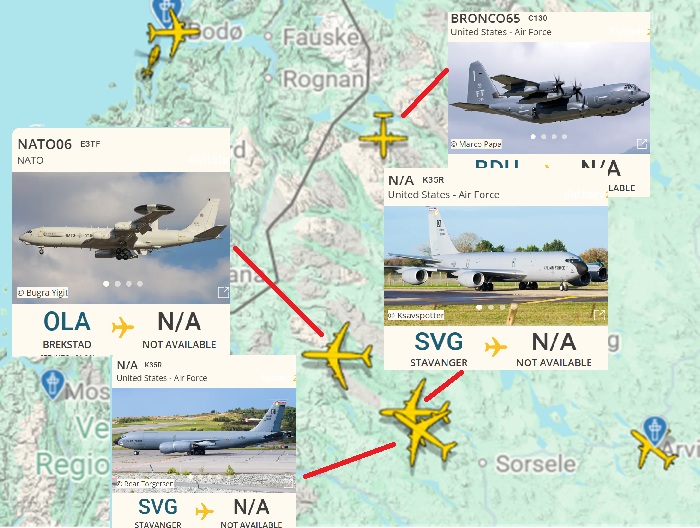
Although strategic command is located in the United States, practical command of the northern flank is carried out via several important bases:
- Bodø (Reitan), Norway: This is where the Norwegian operational headquarters is located, which serves as a central point for the management of Arctic exercises such as Cold Response 2026. It works closely with Norfolk.
- Rovaniemi/Boden axis: For the land-based part of the Arctic flank (Northern Hemisphere), Boden in Sweden plays a key role as a hub for “FLF Finland” (Forward Land Forces), with a forward presence in Finnish Lapland (Rovaniemi and Sodankylä).
- Brunssum (Netherlands): This was previously the command responsible for Northern Europe, but its focus has now shifted more towards Central Europe and the Baltics as Norfolk has taken over the Arctic and Nordic areas.
NATO’s Forward Land Forces (FLF) Finland is a multinational force for deterrence and defence on Finland’s northern flank, with permanent bases in Rovaniemi and Sodankylä. Sweden acts as the framework nation with primary responsibility for planning and establishment, in close cooperation with Finland as the host nation. Participating nations include Denmark, France, Iceland, Norway and the United Kingdom, which contribute personnel and units during exercises; the command element (Multinational Staff Element, MNSE) is permanent with around 30 employees in Rovaniemi.
2. Baltic Belt
Can be compared to the new Hanseatic League, which historically operated in the southern Baltic Sea and across the Skagerrak up to Bergen. Controlled from Germany, the analogy with the Vikings might be more to the taste of the Nordic countries. Because even for NATO it is about managing two different cultures.
The defense of the southern Baltic Sea is “NATO’s Achilles heel” due to its proximity to Kaliningrad and the Suwalki Corridor. Gotland and Bornholm can indeed function as unsinkable aircraft carriers for NATO. But they are therefore at risk of surprise attacks. The problem is that NATO controls the region with two headquarters, Joint Force Command:
- JFC Norfolk (Virginia, USA): Focuses on the Atlantic Ocean and the strategic sea lanes between North America and Europe. They have recently been given increased responsibility for the Nordic region.
- JFC Brunssum (Netherlands): Has traditionally been responsible for central and northern Europe, including the Baltics and the eastern flank.
The southern Baltic Sea is in the middle of the junction between Norfolk and Brunssum. If a conflict breaks out, extremely close coordination is required to avoid “dropping the ball” when Russian ships move from the North Atlantic into the Baltic Sea. Two JFCs risk making different strategic priorities, separate from the Swedish/Finnish perspective seeing the Baltic Sea as a coherent maritime space
- Norfolk sees the Baltic Sea as an extension of the Atlantic and focuses on reinforcements from the United States.
- Brunssum sees it as a land front where the navy’s primary task is to protect the army’s flanks in the Baltics and Poland.
On paper, NATO is stronger than Russia. This increases the risk of surprise attacks in the Baltics and the Baltic Sea islands. In a crisis situation, every minute counts. When leadership is dispersed, several layers of bureaucracy arise: 1). Decision-making: Orders must pass through headquarters in different time zones (Virginia vs. Europe). 2) Logistics: The coordination of moving resources from the North Sea (under one command) to the Baltic Sea (under another) can create friction. 3) Technical interoperability: Despite NATO standards, different headquarters may use different systems for situational awareness, which can lead to a “fog” where no one sees the whole picture at the same time.
Hence these trends within NATO: 1) NATO has introduced new, detailed defense plans that will link the different commands more seamlessly. 2) There is an effort to give Norfolk greater overall responsibility for the “Northern Circle”, which would reduce fragmentation. 3) As a new member, Sweden functions as a bridge that naturally links operational responsibility for both the North Sea and the Baltic Sea
The Baltic Sea is going from being a barrier to becoming a ”NATO sea”, with NATO’s two cooperating commands:. The Danish Belts can be mined. The Kattegat and Skagerrak are protected to secure supplies to western Swedish ports.
- JFC Norfolk (USA): Has overall responsibility for Denmark, Sweden and the entire Nordic region. The logic is to secure reinforcements from the North Atlantic through the Skagerrak and Kattegat.
- JFC Brunssum (Netherlands): Has operational responsibility for Poland and the Baltic States .
- These two commands coordinate to ensure that, for example, a German reinforcement can go through the Danish Straits up to the Baltics without any communication problems.
The Baltic flank is controlled by
- Multinational Corps Northeast (MNC NE) – Szczecin, Poland: This is the “brain” of land operations in Poland and the Baltics. They lead the defense of the critical Suwalki Corridor .
- Multinational Division North (MND N) – Karup (Denmark) & Ādaži (Latvia): A Danish-Latvian-British led division responsible for the defence of the Baltic airspace and land territory. Denmark has a key leadership role here.
Sweden and Denmark can coordinate the defense of the strait. They contribute to securing supply lines to the Baltic countries and blocking the Russian Baltic Fleet. Gotland and Bornholm become “unsinkable aircraft carriers” that cover the entrance to the Gulf of Finland and the Baltic states. Joint Logistics Support Group (JLSG) – Enköping near Stockholm ensures that material and troops landing in, for example, Gothenburg or Esbjerg can be transported through Denmark and southern Sweden/and Denmark to the front.
- Purpose:
3. The Central Nordic Belt
| Property | Central Nordic Belt | Southern Defense Belt |
| Geography | Trondheim – Östersund – Vaasa | Bergen – Gothenburg/Sthlm – Hfors/Tallinn |
| Primary purpose | Military reserve / Relief | Civilian supply & main defense |
| Threat image | Markinvasion / Sabotage | Cruise robots / Blockade |
| Status | Sparsely populated, easier to defend | Densely populated, requires heavy air defense |
This is the biggest doctrinal news. The area from Trondheim/Tröndelag, through Jämtland/Härjedalen, to Sundsvall and on towards Vaasa in Finland forms a main logistical axis .
- Purpose: To create depth in the defense. If the ports in southern Sweden or Finland become unusable, resources can be moved horizontally from the Norwegian west coast, through Sweden, to the Finnish front.
- Change: Infrastructure (railways and roads) is now being equipped to handle heavy military transport in an east-west direction, not just north-south.
4. The metropolitan belt
The axis Bergen–Oslo/Gothenburg–Stockholm–Tallinn/Helsinki – in practice constitutes NATO’s southern main line in the Nordic region.
While the “Central Nordic Belt” (Trondheim–Östersund–Vasa) is a military reinforcement link, the southern axis is the economic and logistical lifeblood of the Nordic region . This is how it is integrated into NATO’s defense:
1. Atlantic Gate (Bergen–Gothenburg)
This is the starting point of the belt for resources coming from the US and UK.
- Bergen: One of the most important naval bases (Haakonsvern) to protect the North Sea Fleet and receive Allied ships.
- Gothenburg: The most important port in the Nordic region. If Öresund is mined or blocked by Russia, Gothenburg is the only port with the capacity to supply both Sweden and Finland with civilian and military imports.
2. The “Swedish Wharf” (Gothenburg–Stockholm)
The infrastructure across Sweden (E20/E4 and railways) functions as an escalator for equipment.
- Logistics: By securing the route between the west coast and the east coast, NATO can move troops from the Atlantic to the Baltic Sea in less than 24 hours.
- Protection: This belt is protected by the Swedish Air Force and air defenses stationed around the major population centers.
3. Baltic Sea Lock (Stockholm–Åland–Helsinki/Tallinn)
Here, the belt becomes an offensive and defensive barrier against Russia.
- Gotland & Åland: These islands act as “anti-submarine aircraft carriers.” By controlling these, NATO can dominate the airspace and sea lanes.
- Gulf of Finland: Cooperation between Helsinki and Tallinn makes it possible to “close the door” to St. Petersburg with coastal missiles and mines from both sides simultaneously.
Comparison between the belts
| Property | Central Nordic Belt | Southern Defense Belt |
| Geography | Trondheim – Östersund – Vaasa | Bergen – Gothenburg/Sthlm – Hfors/Tallinn |
| Primary purpose | Military reserve / Relief | Civilian supply & main defense |
| Threat image | Markinvasion / Sabotage | Cruise robots / Blockade |
| Status | Sparsely populated, easier to defend | Densely populated, requires heavy air defense |
What does this mean in practice?
| Old Doctrine (The Three Sausages) | New Doctrine (Transverse Defense) |
| Logistics: National and isolated. | Logistics: Cross-border (Norwegian ports feed the Finnish front). |
| Air defense: Three separate control centers. | Air defense: A joint Nordic air fleet (~250 planes). |
| Operational depth: Very shallow (Finland lacked a back). | Operational depth: All of Scandinavia serves as a base area for Finland. |
| Threat image: Focus on one’s own territory. | Threat image: Focus on regional stability (Arctic & Baltics). |
Important note: This shift makes the Russian strategic dilemma grow enormously. They can no longer try to “pick off” one nation at a time, but must relate to a unified front stretching from the North Cape to Bornholm.
The areas you list belong to other established collaborations and geographical zones:
- Gulf of Finland – Åland – Stockholm: Part of what is often called the Central Baltic or the “Golden Triangle” in the Baltic Sea. It is a more southern axis with a focus on shipping between the capitals.
- Gothenburg – Oslo – Skagerrak: Forming the core of the Kattegat-Skagerrak cooperation (sometimes called The Scandinavian 8 Million City ). This is a north-south corridor connecting Oslo with Copenhagen via the Swedish west coast.
- England: Is located completely outside the Nordic belt structure and is rather connected to the Nordic countries via the North Sea Strategy (North Sea Region).
Summary difference
| Region | Belongs instead |
| Stockholm/Åland | Central Baltic / Baltic Sea Region |
| Gothenburg/Oslo | Oresund-Kattegat-Skagerrak (OKS) |
| England | North Sea Region |
Yes, there are interesting strategic similarities between the Russian Bastion Defense and the Nordic defense belts (such as the Central Nordic Corridor), but their fundamental purposes are opposites.
Here is a comparison of the concepts:
1. The similarity: Layer-on-layer defense
Both concepts are based on the idea of “Defense in Depth” .
- Russian Bastion: Creates a “protected bubble” (A2/AD) around the Kola Peninsula to secure strategic submarines. It includes sensors, air defenses, and a fleet that extends far into the Barents Sea.
- Nordic Belts: In NATO planning, the Nordic east-west corridors (such as Trondheim–Östersund–Sundsvall–Vasa) serve as a way to quickly bring in reinforcements. By having depth in defense, troops can be received in safe ports in Norway and channeled eastward into protected zones.
2. The Difference: Purpose and Mobility
Where the Russian bastions are static “fortresses”, the Nordic belts are dynamic “supply routes”.
| Property | Russian Bastion Defense | Nordic Defense Belts (NATO) |
| Main goal | Protect nuclear weapons capability (SSBN). | Secure logistics and troop movement. |
| Strategy | Denial: Keeping the enemy away from an area. | Enabling: Moving resources through an area. |
| Geography | Concentrated in bases (Kola, Kaliningrad). | Extended along infrastructure (road/railway). |
| Nature | Close and defensive. | Open and integrated (the Nordic region as a whole). |
The Swedish Air Force and Gotland are the two pieces of the puzzle that tie together the Arctic and Baltic “ends” of the new Nordic doctrine. Here’s a deep dive into how their roles are changing:
1. The Nordic Air Force: 250 planes as a unit
Previously, the Swedish Air Force was tasked with defending Swedish airspace. In the new cross-cutting doctrine, the Nordic countries act as a unified air fleet .
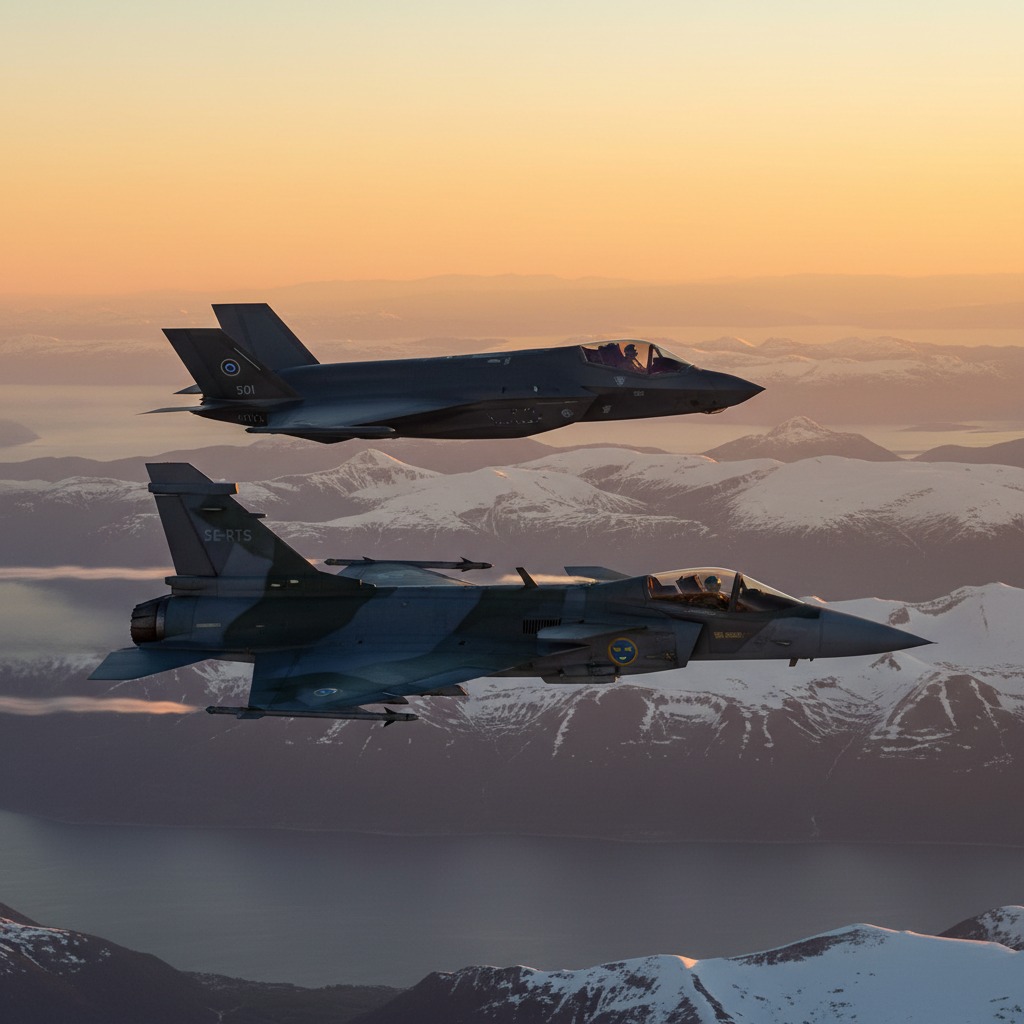
- Seamless bases: Swedish Gripen planes can now land, refuel and load weapons on Norwegian or Finnish bases as if they were at home. This makes it almost impossible for an enemy to knock out the air force on the ground; the target area has suddenly become the entire Nordic region.
- Specialization: Norway and Finland are investing in the F-35 (stealth capability and advanced sensors), while Sweden is contributing with the Gripen (high availability, ability to take off from highways and cost-effectiveness).
- Transversal operations: In the event of a conflict in the Baltics, aircraft could take off from bases in Tröndelag, Norway, fly over Sweden, carry out missions over Estonia, and land in Finland. This creates enormous operational depth.
2. Gotland: From ”sunken ship” to NATO’s lock
Gotland’s role has gone from being an isolated outpost to becoming the hub at the Baltic end of the sausage.
- The A2/AD bubble: By placing long-range air defense (such as Patriot) and anti-ship missiles on Gotland, Sweden can “close” the central Baltic Sea. This creates a protected corridor for NATO reinforcements to the Baltic countries.
- Logistical springboard: Previously, Gotland was difficult to defend because it was far out. Now the island functions as a platform protected by both Finnish and Swedish aircraft, as well as NATO ships.
- Surveillance: Gotland functions as the Nordic and NATO’s ”eyes and ears” in the middle of the Baltic Sea, providing early warning of anything moving out of Kaliningrad or St. Petersburg.
3. Infrastructure: The “Central Nordic” lifeline
For the transverse defense to work, soldiers are not enough; asphalt and rails are required.
- West-east logistics: We are now seeing a massive investment in improving railways and roads between Trondheim – Östersund – Sundsvall and further by ferry to Vaasa in Finland.
- Back-up: If Russian submarines or missiles block the Baltic Sea, Norway’s deep-sea ports on the Atlantic will be Finland’s and Sweden’s only lifeline. The ”mid-Nordic corridor” allows American reinforcements to roll from the Norwegian coast directly to the Russian border in under 24 hours.
In summary: The strategic “knife”
With Sweden and Finland joining NATO, Russia has lost the ability to control the Baltic Sea and the Arctic separately. They are now forced to spread their resources along a 1,300-mile new front, while the Nordic countries can concentrate their forces quickly thanks to horizontal cooperation.
Conclusion: Sweden has gone from being a ”neutral buffer” to being the strategic heart that pumps resources between the Atlantic, the Arctic and the Baltics.
Where is the southern border of the Arctic belt?