If the NATO barrier with sensors and naval units between Greenland – Norway/Scotland breaks, it will be a step forward for Putin’s nuclear submarines with missiles into the weak life of the United States.
After a journey of more than a week from the naval base in Kingsbay, Georgia, the attack submarine USS Washington has hidden in the deep trench between Greenland and Iceland. It lies silent in the darkness, the nuclear reactor running at low speed. Fans and other machinery are almost turned off. In the blue-white light, sonar operators can be seen listening through headphones.
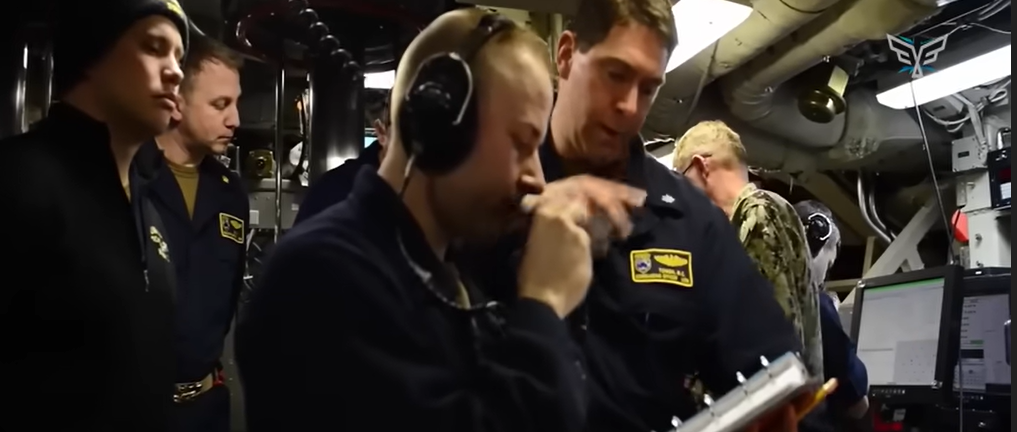
When someone speaks, it’s almost a whisper. No doors slam and the cook is not allowed to have frying pans. Eight hours of work, the same amount of sleep in the bunks and during the rest they play cards, but only with soft ones that don’t make a sound.
The worst part of the two months the submarine remains hidden is not having contact with relatives. The only communication allowed is short messages on longwave, in some cases with an antenna buoy raised to the sea surface. Sending signals is forbidden. In some cases, the boat can rise to near the surface, put up a mast and signal for a few seconds – then go down again.
Historical
The Denmark Strait, as the passage between Greenland and Iceland is called, was the site of the most dramatic naval battle of World War II . The German battleship Bismack sailed into the North Atlantic and disabled two British battleships. Hood sank with two thousand sailors. Bismack also suffered damage, so bad that it was scuttled a year later.
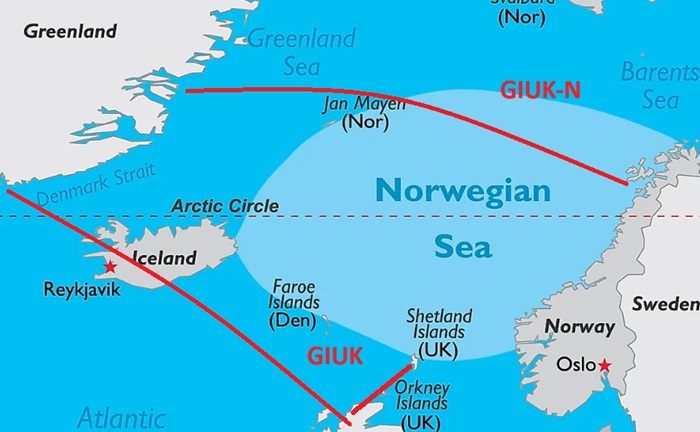
During the Cold War, NATO wanted to keep an eye on Russian naval vessels in the Allanten. Hydrophones like listening ears were parked in a chain from Greenland to Iceland and on to Scotland, hence the name GIUK. Later reinforced with a second barrier: Greenland, the Norwegian island of Jan Mayen and to Lofoten in Norway, often referred to as GIUK-N.
Armored car
The submarines are therefore being made more responsive with more efficient sonars. The same applies to the new technology that replaces the Cold War hydrophones in GIUK. Russia has a similar barrier in the Barents Sea between Novaya Zemya and the Kola Peninsula.

The F-35 makes itself invisible to radar with stealth technology. The Virginia submarines’ stealth is to make themselves almost inaudible. The British Astute class has the same stealth capability. The Russian attack submarines Yasen-/Severodvinsk are almost as quiet. The shape of the hull reduces turbulence. The boats are propelled by water jets instead of propellers. With more efficient sensors, a foreign submarine can be detected at a distance of a mile or more.
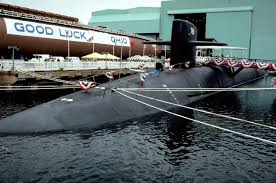
The Virginia-class submarines are armed with torpedoes and Tomahawk cruise missiles. The Russian equivalents have similar armament.
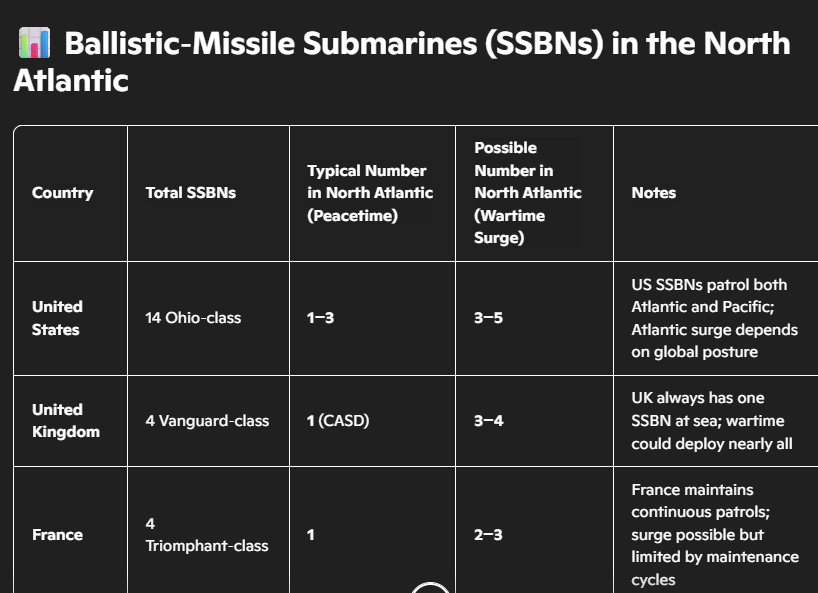
In peacetime, however, it is important to shadow the enemy; register movement patterns and sound signatures. In addition, protect American and British missile submarines (nuclear-powered Ohio and Vanguard classes) that routinely patrol the North Atlantic.
Like a chessboard in 3D
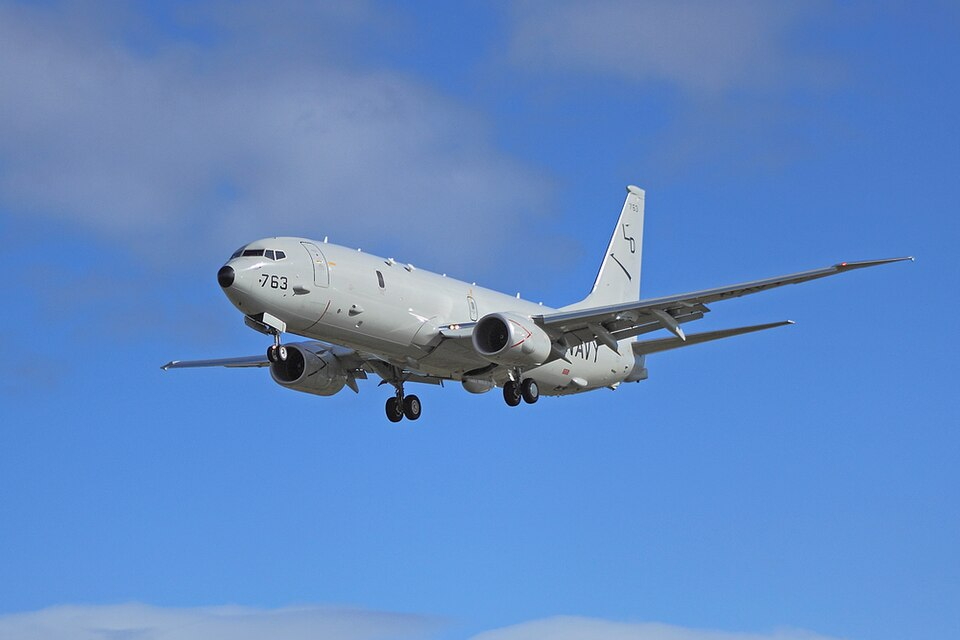
On the surface of the sea, American, Norwegian and English frigates listen for Yasin boats with long towed sonars. From these ships, reconnaissance is conducted with helicopters and P8- Poseidon, dedicated to submarine hunting. Swarms of sonars are spread on the water surface and torpedoes can combat enemy surface ships and submarines.
. In both cases as a kind of 3D chessboard with the carriers passively listening to the seabed surrounded by hydrophones. At the surface frigates, helicopters and aircraft scouting and spidering hydrophone buoys.
On the landward side, stations with radar and signal listening. At the top, swarms of satellites.
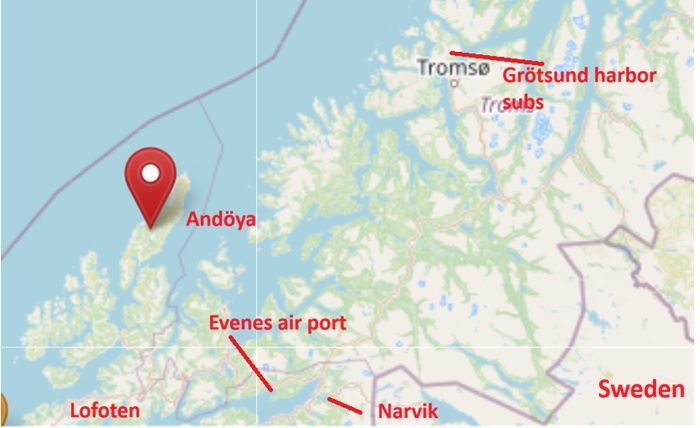
The US’s strength is satellites, while other NATO countries are better equipped with ground stations for radar and signals intelligence around the North Atlantic. Norway has a series of facilities along the coast, including on Andöya and in Vardö, which monitor the Barents Sea. NATO has radar/signaling stations in Iceland and more are planned in the Faroe Islands. The US is a major player in NATO and also monitors the polar region from the Thule base in northwestern Greenland.
| Land | Station / System | Type | Place | Source |
|---|---|---|---|---|
| Norway | GLOBUS Vardø | SIGINT / radar | Vardo, Finnmark | |
| Norway | New air surveillance radars | Long-range radar | Several locations in Norway (including Gyrihaugen) | |
| UK | RAF Lossiemouth | Air Surveillance/ASW | Scotland | |
| UK | UKADGE | Radarnätverk | UK | |
| deer | Keflavik, four other stations | Radar network, air surveillance | Island | |
| NATO/Denmark | Sornfelli | Radar | Faroe Islands |
Hide and seek
.This is a fictional story based on pieces of the puzzle in the media, most of the information surrounding this game of hide and seek between is classified. Let’s assume this:
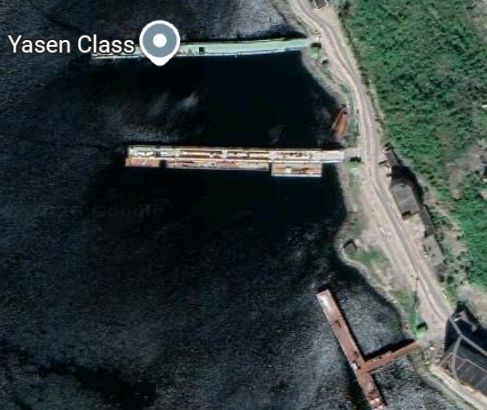
The Yaseny boats appear to have left the Zapadnaya Litsa naval base on the Kola Peninsula, forty miles from the Norwegian border. The satellite photos have prompted NATO to tighten surveillance in the Barents Sea. A US attack submarine is hiding under the ice near Greenland. Norwegian radar/signal stations are on high alert. Frigates with sonars on towlines are running out. More signals intelligence P8 Poseidon are making rounds over the sea, armed with anti-ship missiles, mines and sensor buoys. From Iceland and England, the same kind of plane is meeting to cover GIUK.
An M-54 helicopter gets a whiff of a Russian Yasen submarine that is slowly sneaking deep into the Denmark Strait. On the USS Washington, the operators get a buzz in their headphones. The Russian is shadowed at a few knots at cyclist speed, a mile behind to avoid detection. Because then the Russian can rush in zigzags to shake off the shadower. It’s a good thing it isn’t met by English submarines that have rushed from the base in Scotland.
The purpose of the patrol is to prevent Russian submarines from reaching the Atlantic in wartime and torpedoing ships carrying troops and equipment in convoys from the United States to Europe. What is more important to Trump is that Russian missile carriers do not ambush the American coast. In the same way that the Western counterpart intends to hide near the polar ice in the Barents Sea. The balance of terror is based on this second-rate capability.
The US, with a couple of submarines on patrol in the North Atlantic, shares the surveillance with Norway, Great Britain and to some extent France – countries that have a few submarines in the area. In an emergency, the countries double the number at sea, or even more. The US, with its satellites, can detect submarines and surface ships leaving the naval base a dozen miles east of the border with Norway. And then shadow these ships cat-and-mouse through the Barents and Norwegian Seas.
Mathematics about NATO is breaking down
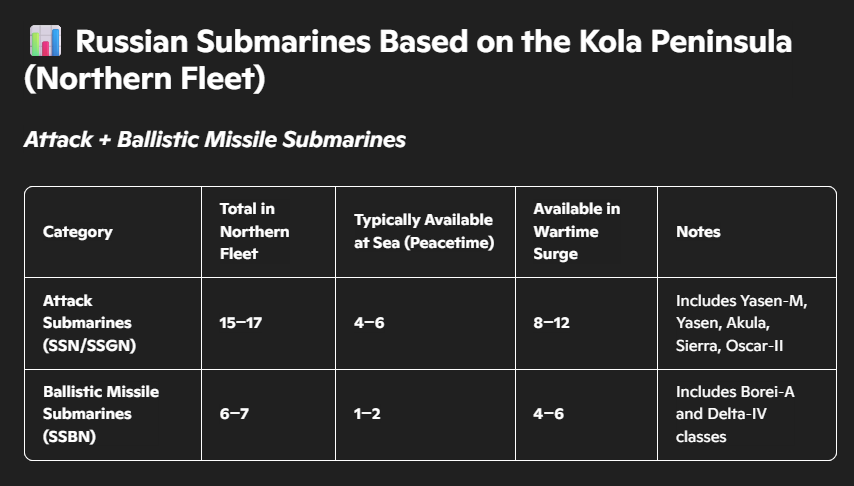
Russia is equipping its navy at Kola to stop shipping from Europe to/from America and other parts of the world in war. Also to fire ballistic missiles and cruise missiles in ambush near the coasts of Europe and the United States.
Send message to Copilot
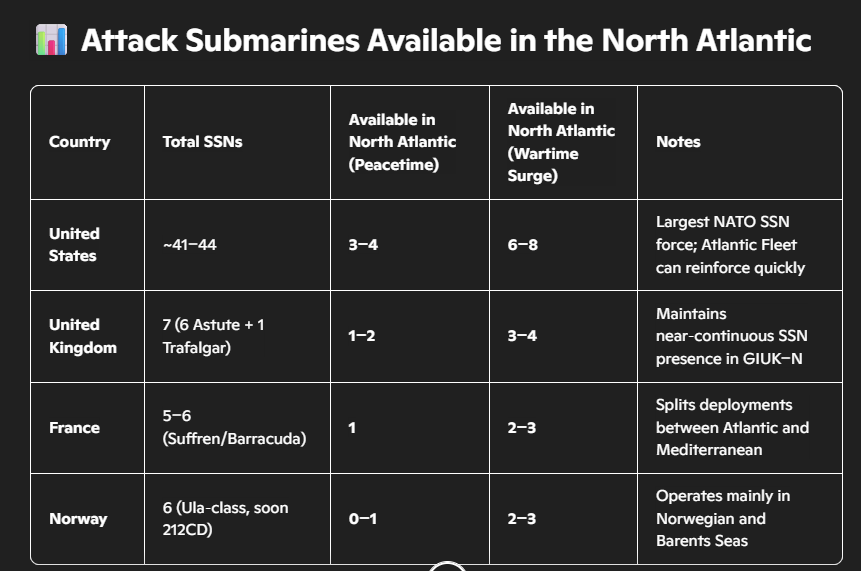
The USA has about 50 attack submarines (nuclear-powered Virgina and Los Angeles class) of which about twenty are assumed to be destined for the North Atlantic. A few patrol the Norwegian Sea and the Barents Sea in peacetime, a few more during exercises and heightened readiness. The British have five submarines of the same type with an occasional one on peacetime patrol duty. The same applies to France. Norway has
The nuclear-powered submarines hide in the depths for 2-3 months at a time. They are only seen to replenish food supplies and change crews. This can happen in Reykjavik or Tromsø, to avoid the long journey home to Scotland near Grlagow or to Georgia on the south coast of the USA.
On the sea surface, frigates scout and in the air, helicopters and aircraft, mainly Poseidon. From both the USA and Norway, which also man stations with radar and signal listening. which replaces the sensor cable from the Cold War. Washington and the other attack submarines in the Virginia and Los Angeles classes are part of a gatekeeper filled with hydrophones and other sensors. A little over a week after the attack submarine USS Virginia left the base in Georgia in the southern United States, they can scout for Russian submarines in the strait between Greenland and Iceland. There is a barrage line with sonars and listening cables down to Scotland, hence the name GIUK.
The nuclear-powered USS Virgin is relieved as a watchdog by the British submarine Astute, nuclear-powered and as silent as the Virgine class, which has rushed from the naval base near Glasgow. The USS Virgine continues north. It ambushes the next barrier line. Known as GIUK-N and runs between Greenland, Jan Mayen and Northern Norway. American signals intelligence and satellites have received information about ships buying out the Russian naval base Nerpichya, about ten miles from the Norwegian border.
In
The submarine patrols a loop along the Norwegian continental shelf, scouting in the Barents Sea and turning homeward along Greenland. Alternating between rapid movements and lying still on the bottom. They listen for sounds from Russian naval units, which are moving further and further south. Often near oil rigs, pipelines and underwater cables. At the GIUK line between Greenland, Iceland and the United Kingdom/Norway, the submarine serves as a watchdog to scout, then in a critical situation to prevent Russian colleagues from seeking out the Atlantic to block shipping from the United States to Europe. The United States has about twenty submarines in the Atlantic; Great Britain/Norway/The Netherlands have almost as many. Although if the United States withdraws its submarines, the damage is even worse, with your superiority with satellites and signals intelligence.
An American withdrawal from NATO – for the benefit but perhaps not in name – would have consequences for the security of Europe’s maritime areas. The defense of the Norwegian Sea and the Barents Sea would then risk being weakened in a way that Europe cannot compensate for in the short term.
The Norwegian Sea and the Barents Sea are central for three reasons:
- Russia’s nuclear deterrent
The Barents Sea is the homeport for the Russian Northern Fleet’s strategic submarines (SSBNs)
on the Kola Peninsula. Their protection is a cornerstone of Russia’s second-strike capability. - Atlantic connection
Control of the Norwegian Sea determines whether reinforcements can reach Europe from North America – the classic GIUK gap (Greenland–Iceland–Great Britain, also Norway). - North Atlantic sea control and the underwater domain
Submarine hunting, maritime surveillance, cable protection and air/sea-based deterrence are crucial
here.
The United States has been the completely dominant actor in all three dimensions.
deer
The Norwegian Sea and the Barents Sea are the hub of the North Atlantic security order. Here, Russia’s strategic nuclear deterrence, NATO’s protection of the Atlantic connection, and Europe’s dependence on maritime and air control in the north meet. Direct military impact of a US withdrawal
The United States contributes:
- Nuclear-powered attack submarines (SSN)
- P-8 Poseidon flight
- Sensors, satellites and intelligence
- Command and liaison capacity
Without the US, this capability is significantly weakened. American attack submarines, advanced underwater sensors, P-8 Poseidon aircraft, and global intelligence gathering lack European counterparts on a sufficient scale. The result is that Russia could transform the Barents Sea into a more or less closed bastion area, with increased freedom of action also in the Norwegian Sea.
GIUK line
The GIUK line ( Greenland-Iceland-United Kingdom ) is a strategically important sea and air surveillance zone in the North Atlantic. Should be called GIUKN because Norway is an important part. In the flank Denmark in the south and Sweden as a shield on the North Calotte. The GIUK line is strategically important with NATO’s sea control, as a passage in the North Atlantic.
The GIUK line is not a physical wall or fortification, but a geographically narrow sea area that acts as a natural bottleneck between the Arctic/North Atlantic and the open Atlantic. Any major naval forces or submarines that want to get from Russian bases in the Arctic Ocean out into the Atlantic must in practice pass through this area.
The GIUK line was central to NATO’s strategy against the Soviet Union. To secure the sea connection between North America and Europe. It was about detecting and tracking Soviet submarines, especially those carrying nuclear weapons. Sonar lines were laid out on the seabed, reinforced by submarine chasers. The air was monitored with radar and aircraft. Surface ships and submarine chasers patrolled the sea. Important bases were found in Great Britain and Norway.
Since the 2010s, GIUK has become important again due to increased Russian activity, expanded in the Murmansk region. Infrastructure with cables, pipelines and oil rigs is vulnerable.
Spitting NATO fatally on both sides of the Atlantic
If Trump seizes Greenland, NATO will be blown up. Even if the US brings back the submarines, Europe can help protect the strait in peacetime. But its endurance will deteriorate, especially when the US’s early warning from satellites and signal interception disappear. The US nuclear umbrella can no longer be trusted.
But without advance warning from Norwegian and British ground stations, among others, the United States risks having Russian naval units on its coasts. With or without nuclear weapons in missiles and cruise missiles. Or drones at sea and on land. In that perspective, Trump’s claim to ownership of Greenland weighs lightly.
Submarines
The Navy
A pair of Norway’s five submarine-hunting frigates (of the Fritiof Nansen type) constantly patrol the North Atlantic. The UK has a dozen frigates in these waters for this task. Where the US has about ten dedicated destroyers. Norway has five conventional submarines with a pair constantly on patrol mainly in the shallow waters of the North Atlantic. P‑8A Poseidon in the North Atlantic :
| Land | Total number of P-8A | Stationed/rotating in the North Atlantic | Normally on patrol |
|---|---|---|---|
| deer | 100+ | 10–15 | 3–6 |
| UK | 9 | 7–9 | 2–3 |
| Norway | 5 | 4–5 | 1–2 |
Reconnaissance in the air
The US has about ten P8-Poseidon reconnaissance planes stationed at Keflavik Island, Scotland and in Norway. The UK has as many, as well as additional planes from Scotland. Norway has five at the same airports as the US planes, Evenes near Narvik and Andöa north of Lofoten.
More facts
/By Ingeamar Lindmark
The GIUK line was central to NATO’s strategy against the Soviet Union:
- The purpose was to detect and track Soviet submarines .
- Protect maritime connections between North America and Europe.
- Prevent nuclear-armed submarines from gaining free access to the Atlantic.
NATO built:
- Sonar lines on the seabed (e.g. the SOSUS system).
- Aerial surveillance with submarine chasers.
- Surface combat ships and submarines.
- Radar stations and bases in Iceland and the UK.
In modern times
After the fall of the Soviet Union, focus decreased, but since the 2010s, the GIUK line has become important again due to:
- Increased Russian naval activity.
- NATO’s focus on the Arctic and the North Atlantic.
- Protection of submarine cables and critical infrastructure.
Iceland, Norway, the UK and the US still play key roles in monitoring the area.
Summary
The GIUK line is:
- A strategic passage in the North Atlantic.
- Crucial for NATO’s maritime control.
- Historically central during the Cold War.
- Still militarily relevant in today’s security policy situation.
Anti-submarine warfare – the critical weakness
Norway, the UK and France possess advanced naval resources, but lack the endurance for continuous maritime control in the entire area. Without US contribution, anti-submarine warfare becomes fragmented and reactive rather than coherent.
- a)
This increases the risk of Russian breakthroughs in the North Atlantic and weakens the protection of the transatlantic maritime connections on which Europe depends in a crisis or war. The GIUK gap between Greenland, Iceland and the UK – then loses its function as a strategic barrier. A thinner air defense in the Arctic The US role in air surveillance, air refueling and strategic reconnaissance is also central to air defense in the north. Without American resources, it will be more difficult to detect cruise missiles and aircraft from the Barents region early. Norwegian bases such as Evenes, Ørland and Andøya will come under increased military pressure, while warning times will be dramatically shortened.
A more fragmented Europe
A NATO without the US risks not only military weakness, but also political inertia. Leadership,
coordination and decision-making will be slower – a dangerous combination in an area
where escalation can occur quickly. Europe can deepen Nordic cooperation, strengthen Norwegian coastal defenses and increase the British-French presence in the North Atlantic. But in the short and medium term, it cannot replace the US’s global intelligence chains, submarine fleet or strategic deterrence.
Consequences far beyond Norway
For Sweden and the rest of the Nordic countries, the development has indirect but serious consequences. Weaker protection of the Atlantic connection makes military aid to northern Europe more difficult. The pressure on the Baltic Sea area and the Arctic Ocean is increasing, while the demands on national defense capabilities are growing. Overall, an American withdrawal from NATO would mean a structural deterioration in security on Europe’s northern flank. It is not necessarily about an immediate war, but about a strategic shift that clearly benefits Russia and leaves the Nordic countries in a significantly more vulnerable position.